
Flexible Couplings and Flexible Shafts
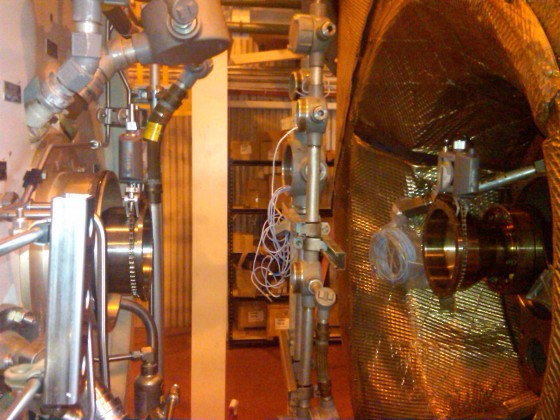
Most mechanics are pretty familiar with flexible couplings.  They are designed with an elastomer, or flexible element, which compensates for slight amounts of misalignment through a sliding motion between the…

Read More

Aligning Uncoupled Machines

Normally, it is faster and more accurate to perform shaft alignment while the machines are coupled together.  This offers several benefits such as:  Keeping the relative angular positions of the…

Read More

Defining Angularity in Shaft Alignment

There are only two types of measurements for shaft misalignment – offset, which may be called parallel or rim, and angularity, which is sometimes called slope, or face. Offset (parallel…

Read More

Defining Level vs. Flat

In mechanical trades, most of us have been taught that most installed machines must be installed level and the bases must be flat. But contrary to what many of us…

Read More

30+ Years of Alignment – A Look Back

Back around 1982, when I made my first forays from machinist into mechanical maintenance, I remember hearing about coupling alignment while working at a now-defunct rope factory in North Carolina.…

Read More

Shims 101

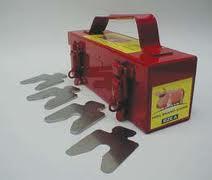
Stainless steel shims have for the most part replaced cutting shims from rolled stock. They speed up the alignment process dramatically. They usually assure a more accurate alignment since they…

Read More