

Couplings are vital components in industrial machinery, connecting shafts and transmitting power. Selecting the correct coupling and ensuring proper alignment are critical for efficient operation and preventing premature wear or failure. This blog post explores various coupling types, their appearance, and specific alignment considerations.
Types of Couplings
Sleeve Couplings (Rigid):

A simple, cylindrical sleeve that fits over the ends of two shafts and is secured by set screws or pins.
- Looks like: A short metal tube.
- Considerations: Requires very precise alignment due to its rigid nature. Often used for light-duty applications.
Flange Couplings (Rigid):
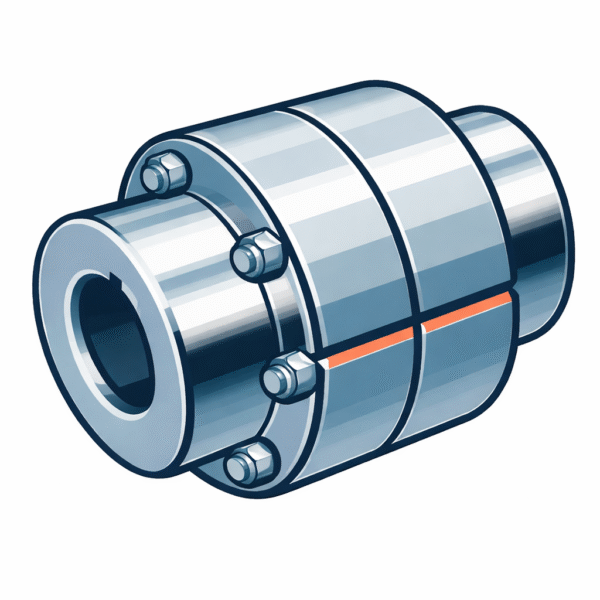 Two flanges are attached to the shaft ends and bolted together.
- Looks like: Two circular plates bolted face-to-face.
- Considerations: Offers a strong connection but requires accurate alignment. Used for heavier applications than sleeve couplings.
Clamp Couplings (Rigid):
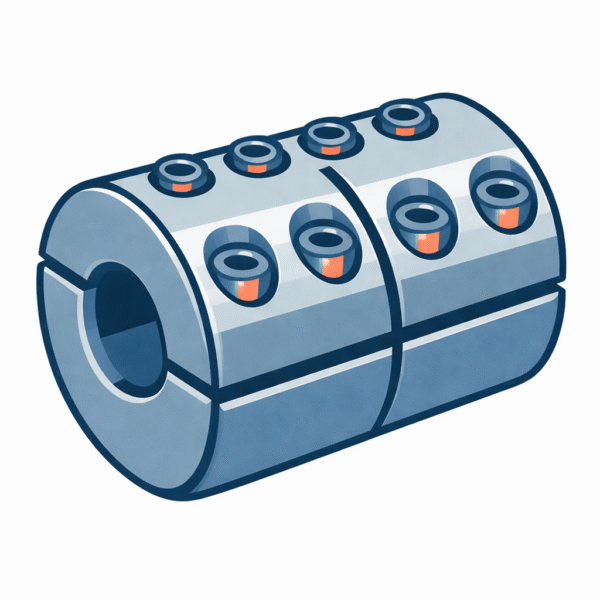
Two-piece couplings that clamp onto the shafts.
- Looks like: Two halves that bolt together around the shafts.
- Considerations: Easier to install and remove than sleeve or flange couplings, but still requires good alignment.
Jaw Couplings (Flexible):
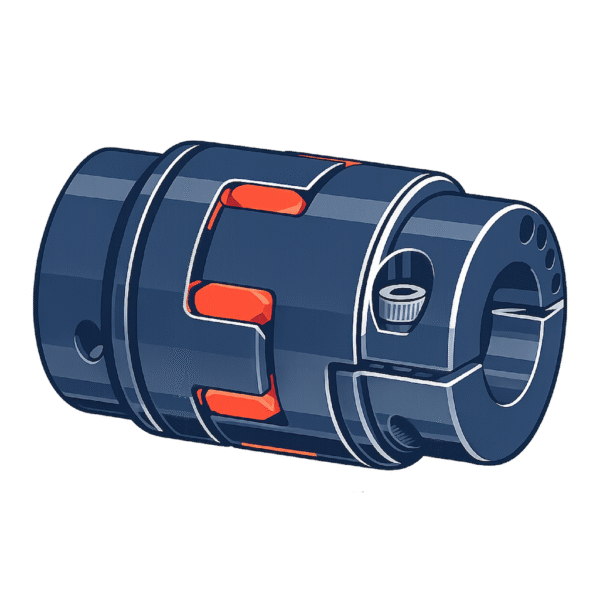 Two hubs with interlocking jaws, separated by a flexible insert (spider).
- Looks like: Two metal pieces with protruding “jaws” that interlock with a flexible center piece.
- Considerations: Simple and economical, accommodates some misalignment and vibration. The flexible insert wears over time and needs replacement.
Gear Couplings (Flexible):
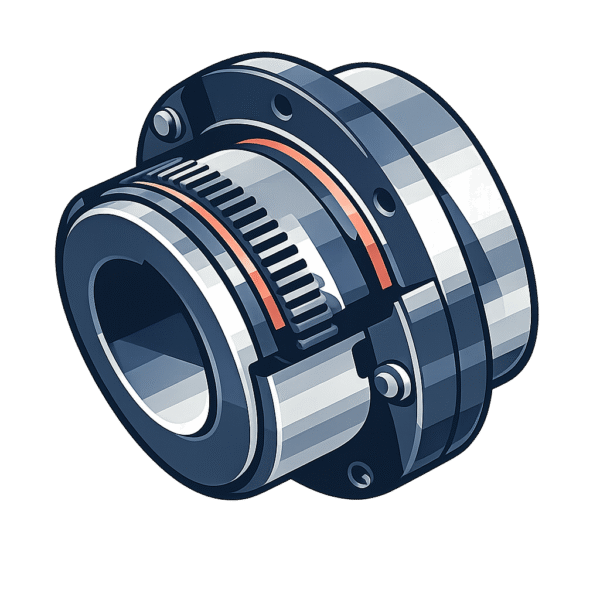
Two hubs with external gear teeth that mesh with internal gear teeth in a sleeve.
- Looks like: Two hubs with gear teeth engaging within a covered sleeve.
- Considerations: Handles high torque and significant misalignment, but requires lubrication. Can generate noise and vibration.
Grid Couplings (Flexible):
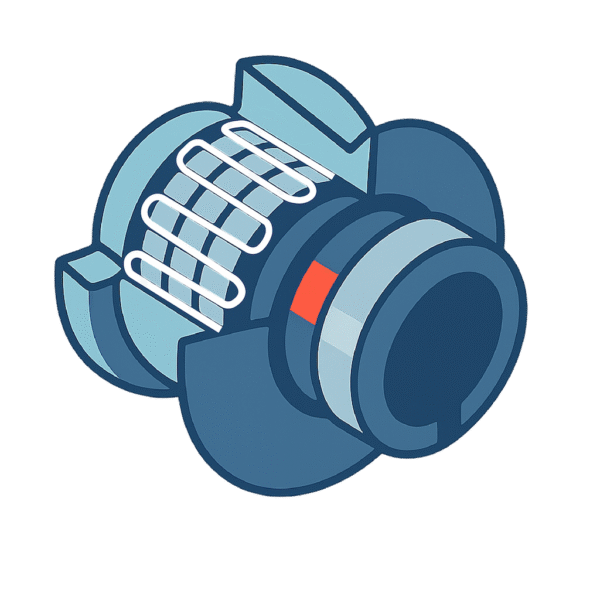
A grid spring weaves through slots in two hubs.
- Looks like: Two hubs with slots, with a metal “grid” weaving through them.
- Considerations: Good vibration damping and handles some misalignment. Requires lubrication.
Universal Joints/Cardan Shaft (Flexible):
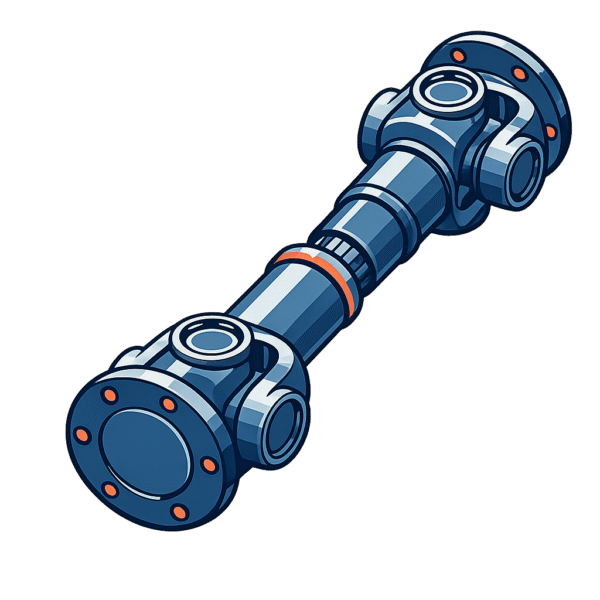 Two yokes connected by a cross-shaped piece (spider).
- Looks like: Two “Y” shaped pieces connected by a cross or “spider”.
- Considerations: Allows for offset misalignment, commonly used in cardan shafts. Requires lubrication.
Elastomeric Couplings (Flexible):
Uses an elastomeric material (rubber, polyurethane) to transmit torque.
Several variations exist:
- Tire Couplings:
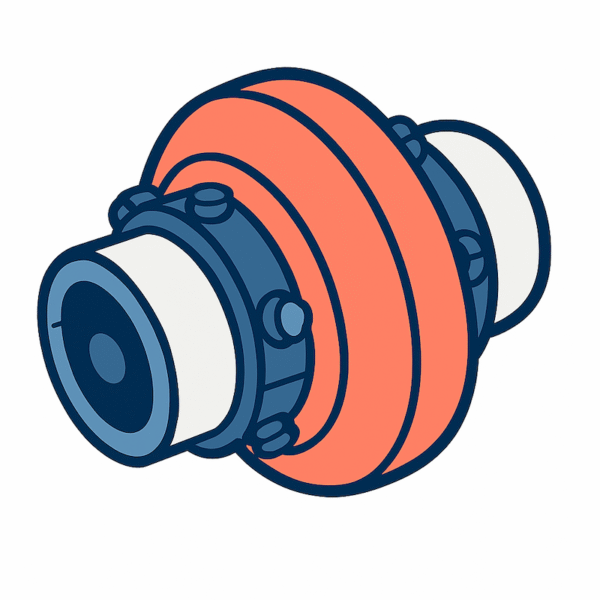 Has a tire-shaped elastomeric element.
-
- Looks like: A rubber tire connecting two hubs.
- Considerations: Excellent vibration damping and handles misalignment.
- Pin Bushings:
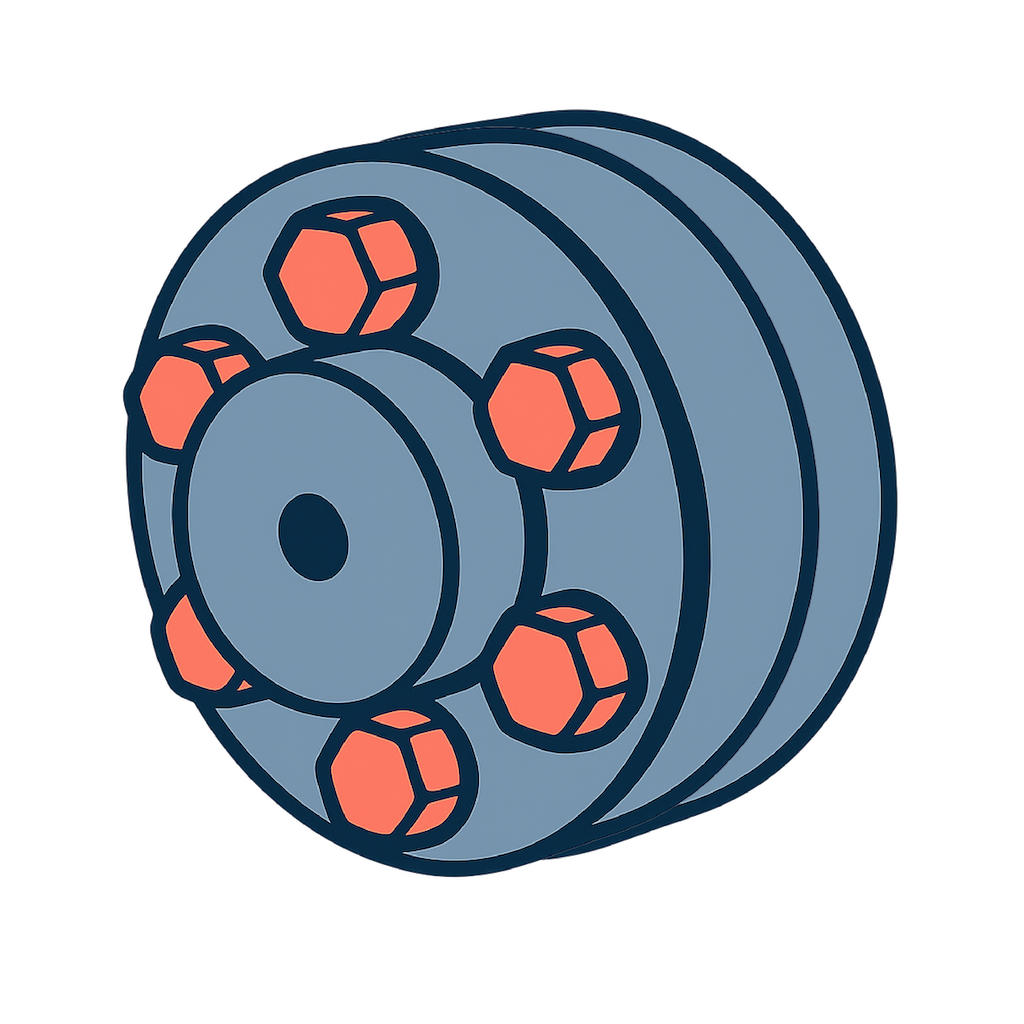 Uses pins and elastomeric bushings.
-
- Looks like: Two flanges connected by pins with rubber or urethane bushings.
- Considerations: Simple and cost-effective, accommodates some misalignment.
- Jaw Couplings with Elastomeric Inserts:
 Similar to standard jaw couplings, but with a more flexible insert.
-
- Looks like: Similar to standard jaw coupling, but with a more compliant insert.
- Considerations: Combines the simplicity of jaw couplings with improved vibration damping.
- Bellows Couplings (Flexible):
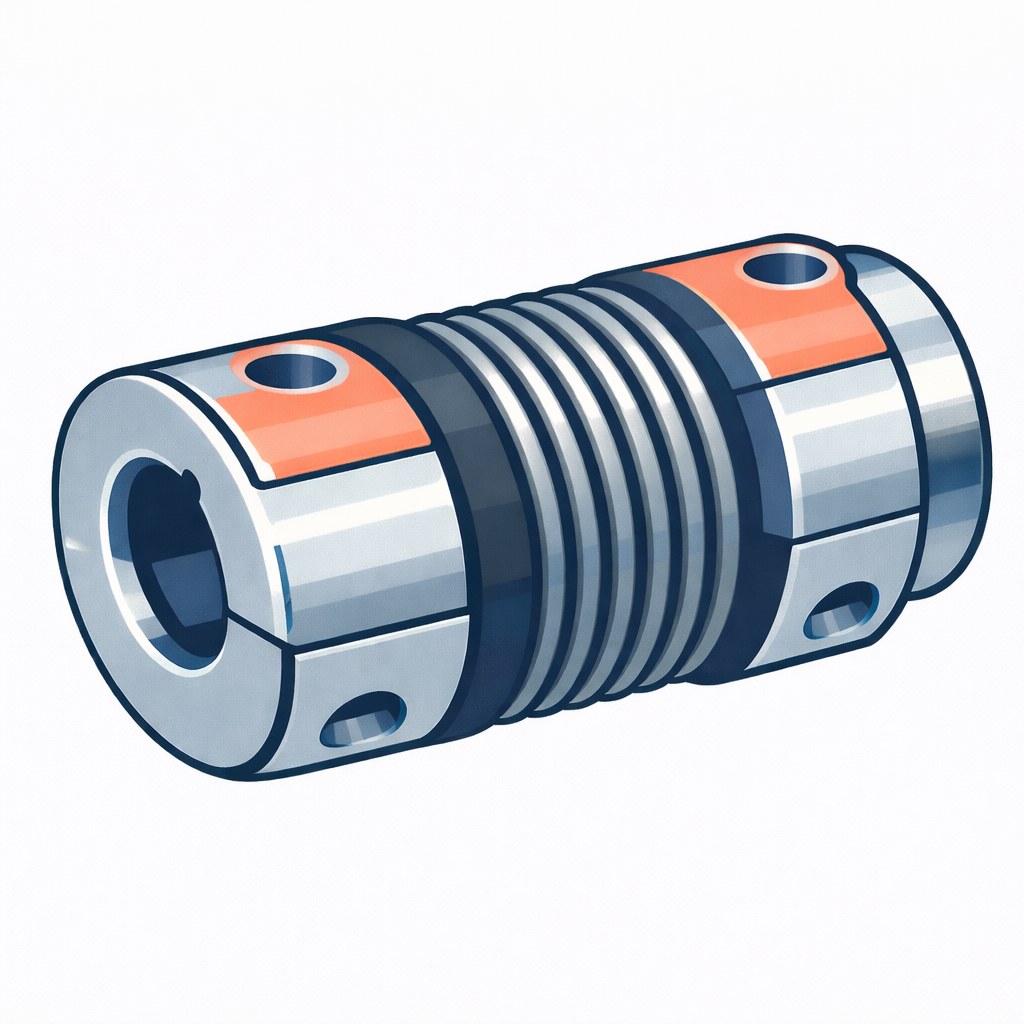 Uses a metallic bellows to connect the shafts.
-
- Looks like: Two hubs connected by a thin, corrugated metal tube.
- Considerations: High torsional stiffness, accommodates small misalignments, often used in precision applications. Delicate and easily damaged by excessive misalignment.
Alignment Considerations for Different Coupling Types:
The alignment considerations below provide coupling-specific guidance to reduce misalignment, minimize vibration, and extend equipment life.
Sleeve, Flange, and Clamp Couplings:
- Require very precise alignment.
- Dial indicators or laser alignment systems are recommended.
- Focus on concentricity and angular alignment.
Jaw Couplings:
- While they tolerate some misalignment, excessive misalignment will shorten the life of the flexible insert and bearings of the machines.
- Ensure proper engagement of the jaws and even compression of the spider.
Gear Couplings:
- Proper lubrication is crucial.
- Ensure the teeth are properly meshed and that the coupling is not overloaded.
- Misalignment can lead to rapid wear.
Grid Couplings:
- Ensure the grid is properly seated in the slots and that the hubs are aligned.
- Lubrication is also important.
Elastomeric Couplings:
- Observe the manufacturer’s recommendations for compression of the elastomeric element.
- Excessive compression can lead to premature failure.
- Ensure even load distribution across the elastomeric element.
Bellows Couplings:
- These are delicate and require precise alignment to avoid damaging the bellows.
- Avoid excessive bending or twisting of the bellows during installation and operation.
Universal Joints:
- The alignment focuses on minimizing the angles between the shafts.
- Ensure proper lubrication of the joints.
- Excessive angles can lead to vibration and premature wear.
Conclusion: Shaft Alignment and Equipment Reliability
In summary, understanding how different shaft coupling types interact with shaft alignment practices plays a critical role in reliable machine operation. Selecting the right coupling and applying proper shaft alignment practices helps reduce vibration, limit premature wear, and extend the life of rotating equipment. Whether working with rigid or flexible couplings, following shaft alignment best practices and manufacturer guidelines ensures consistent performance and fewer unplanned failures. By prioritizing precision shaft alignment, maintenance teams can improve uptime, protect assets, and support long-term equipment reliability.