
A vibration alarm should answer a useful question.
Unfortunately, that question is sometimes reduced to: “Did the number cross the line?”
The better question is: “What does this vibration level mean for this machine?”
A 200 HP motor, a belt-driven fan, and a multi-stage gearbox do not behave the same way. Their normal vibration signatures are different, the faults we expect to find are different, and the vibration measurements that matter most may be different. That is why effective condition monitoring requires more than applying one universal alarm value to every asset in the plant.
Within Acoem’s vibration analysis tools, several approaches can be used to evaluate machine condition, including ISO vibration severity criteria, machine-specific Accurex™ AI automatic diagnostics, and customized alarms based on historical machine data.
Each serves a different purpose.
Start With What an Alarm Can and Cannot Tell You
An alarm is a decision aid, not a diagnosis.
If an overall vibration measurement increases beyond an established limit, we know the machine deserves attention. We do not automatically know why it changed.
Likewise, a machine can remain below a generalized overall vibration limit while a localized bearing, gear, lubrication, hydraulic, or structural problem is beginning to develop.
Good condition monitoring therefore uses alarm limits to identify meaningful changes and then uses the available vibration information to understand what is physically happening in the machine.
Three questions are especially useful:
- How severe is the machine’s overall vibration?
- Has the machine changed from its normal behavior?
- What fault or faults best explain the vibration symptoms we are seeing?
ISO severity criteria, historical trending, and Accurex™ AI diagnostics help answer different parts of that puzzle.
Using ISO 20816-3 for Overall Vibration Severity
ISO 20816-3:2022 provides guidelines for evaluating vibration on many types of industrial machinery above 15 kW operating between 120 and 30,000 RPM.
The standard evaluates vibration using broad severity zones rather than attempting to diagnose a particular mechanical fault.
The four evaluation zones are commonly described as:
- Zone A: Typical of newly commissioned machinery
- Zone B: Generally considered acceptable for unrestricted long-term operation
- Zone C: Normally considered unsatisfactory for continuous long-term operation
- Zone D: Vibration severe enough that damage may occur
For machines covered by ISO 20816-3, the evaluation depends in part on machine size and the dynamic characteristics of the support system.
Machine Groups
ISO 20816-3:2022 separates applicable machinery into two primary groups:
Group 1 – Large Machines
Machines with rated power above 300 kW, or electrical machines with shaft heights of 315 mm or greater.
Group 2 – Medium Machines
Machines with rated power above 15 kW and up to 300 kW, or electrical machines with shaft heights from 160 mm to less than 315 mm.
The support system is also categorized as rigid or flexible.
That distinction matters.
For example, the Zone B/C boundary for a Group 2 machine is:
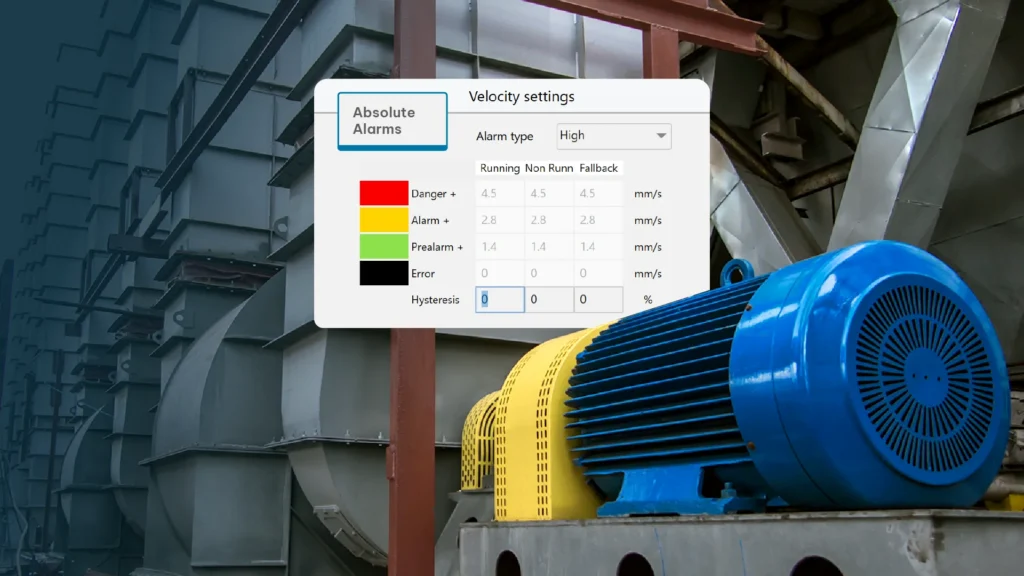
2.8 mm/s RMS on a rigid support
4.5 mm/s RMS on a flexible support
It would be easy to look at those numbers and conclude that a flexible-mounted machine is simply “allowed to vibrate more.”
That misses the physics.
The machine and its supporting structure form a dynamic system. A flexible support can respond differently to the machine’s forcing frequencies, so the vibration measured at the bearing housing or structure can be different even when the mechanical condition of the rotating components is similar.
And “rigid” or “flexible” should not be determined simply by looking at the base. In vibration terms, the distinction depends on the relationship between the natural frequencies of the machine/support system and the frequencies exciting it.
That is why ISO limits should be treated as evaluation guidelines, not universal pass/fail numbers.
Overall Vibration Is Important
But It Is Not the Whole Machine
An overall velocity value takes a large amount of vibration information and reduces it to one useful number.
That is both its strength and its limitation.
Imagine two machines that both measure 2.0 mm/s RMS overall velocity.
One has a clean spectrum dominated by normal running speed.
The other has recently increased from 0.7 mm/s, developed new harmonics, and is beginning to show impacting in the acceleration data.
The overall numbers are identical.
The machines are not.
This is why ISO itself considers not only steady vibration magnitude but also changes in vibration magnitude, and why an analyst should never stop at the color of an alarm indicator.
Sometimes the most important alarm is simply:
This machine doesn’t behave the way it did last month.
Let the Machine Establish Its Own Normal
Once enough repeatable data has been collected, historical behavior becomes one of the most valuable references available.
A machine that has operated consistently at 1.0 mm/s for three years and suddenly rises to 2.4 mm/s has changed significantly — even if a generic severity chart still places it in an acceptable zone.
That change deserves investigation.
Statistical and baseline alarms allow reliability teams to establish limits around the actual behavior of an asset instead of relying entirely on generalized machinery classes.
This is particularly useful when machines:
- operate under repeatable conditions,
- have enough historical data to establish a meaningful baseline,
- behave differently from a generic population,
- or require earlier warning than a broad severity threshold provides.
Trending does not replace diagnosis either.
It tells us something changed.
The next job is figuring out what changed and why.
Where Accurex™ AI Is Different
Accurex™ AI automatic diagnostics approaches the problem from another direction.
Instead of asking only whether an overall vibration value crossed a generalized limit, Accurex™ analyzes the vibration symptoms measured on the machine and evaluates them in the context of the machine being tested.
The machine is first described using the Acoem Falcon’s visual setup interface. Rather than requiring the user to build an expert vibration-analysis model by entering bearing defect frequencies, bearing part numbers, gear tooth counts, or impeller vane counts, the system uses the basic configuration of the machine along with information such as operating speed and power.
For example, the user may define a machine as:
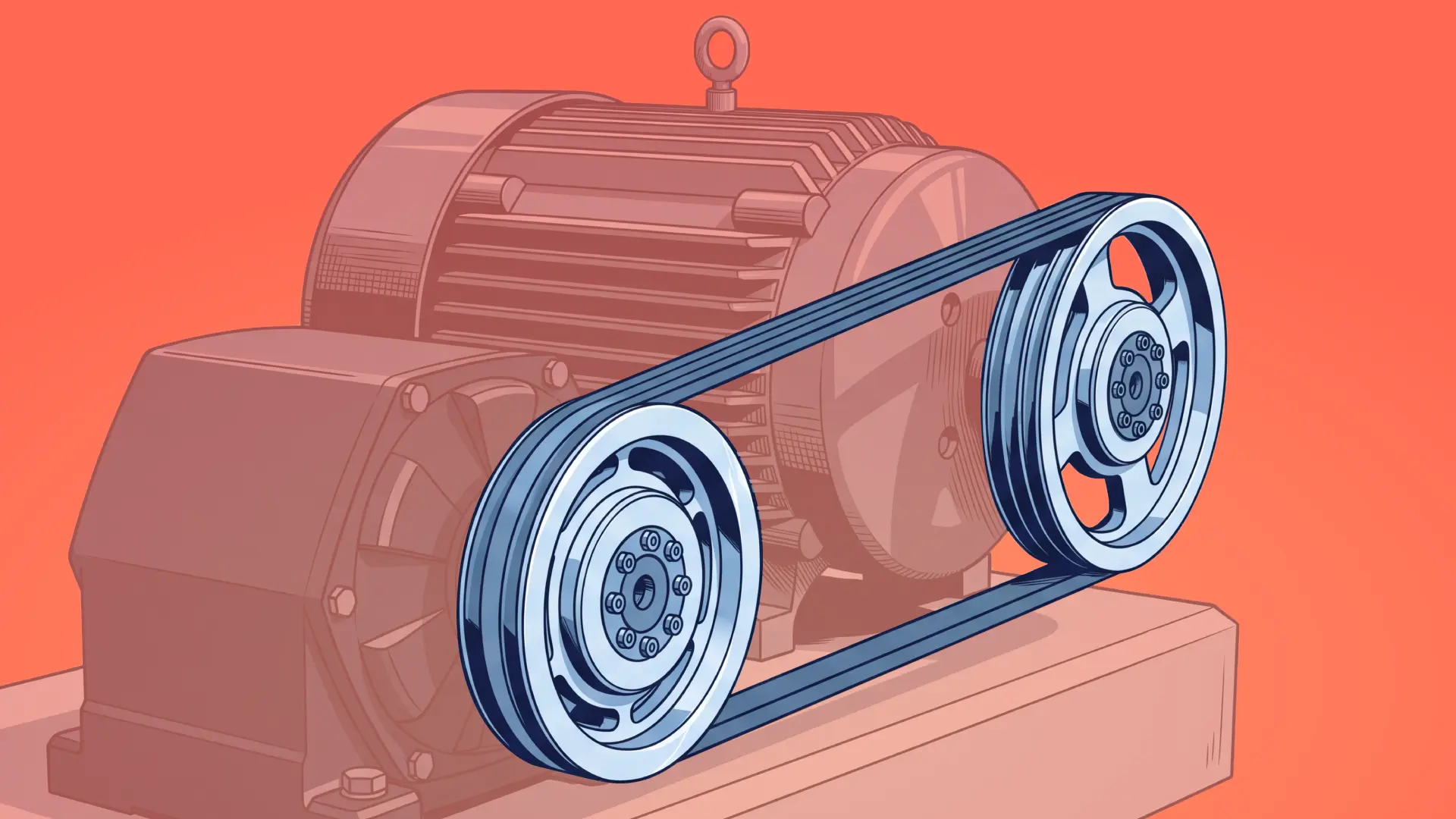
Electric Motor → Belt Drive → Fan
or:
Electric Motor → Coupling → Pump
That simple distinction tells the diagnostic system something extremely important:
What kind of machine am I looking at?
From there, Accurex™ evaluates the symptoms contained in the vibration measurements using Acoem’s diagnostic logic.
Depending on the machine and the evidence present in the data, Accurex™ can identify conditions associated with faults such as:
- unbalance
- misalignment
- looseness and mounting problems
- friction
- structural resonance
- bearing and lubrication problems
- gear problems
- and pump cavitation
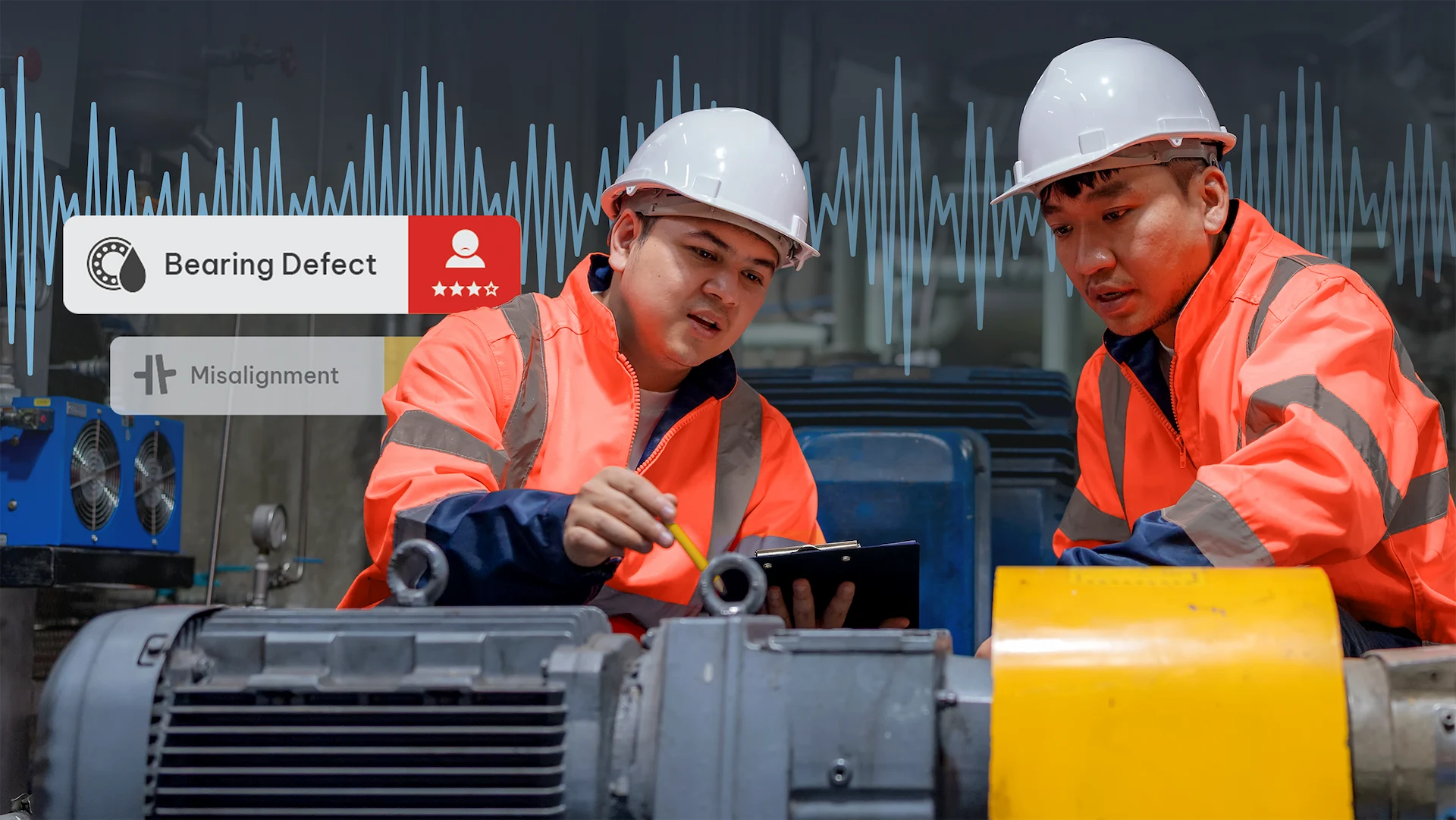
The result is more than a red or green overall vibration value. Detected faults can be presented with their location, severity, and confidence level, helping the user understand what the vibration data is suggesting and where to investigate.
This is an important distinction:
Accurex™ is not simply an ISO chart with more alarm frequencies.
It is a symptom-based diagnostic system.
Why Accurate RPM Still Matters
Automatic diagnosis does not eliminate the fundamentals of vibration analysis.
One of the most important is operating speed.
Running speed gives vibration data context. A peak at 30 Hz means something very different on a machine running at 900 RPM than it does on one running at 1,800 RPM.
For that reason, accurate machine speed is important when using Accurex and when analyzing vibration data manually.
The Falcon includes a built-in stroboscope to help determine operating RPM when the exact speed is not already known.
A good rule remains:
Before interpreting the vibration, know how fast the machine is actually turning.
Everything else builds from there.
A Better Alarm Strategy Uses More Than One Reference
There is no single alarm methodology that answers every vibration question.
ISO severity criteria provide a useful generalized reference for overall machine vibration.
Historical and statistical alarms identify meaningful changes from a machine’s established behavior.
Accurex™ AI automatic diagnostics evaluate the vibration symptoms in the context of the machine and help identify the faults most likely to be producing them.
Used together, they provide a much more useful picture than any one number by itself.
Consider a machine that remains inside an acceptable ISO zone but has doubled in vibration since the previous route.
The ISO value provides context.
The trend tells you something has changed.
The spectrum, waveform, acceleration data, operating condition, machine inspection, and automated diagnostic results help determine why.
That is where vibration monitoring becomes vibration analysis.
The goal is not simply to keep every machine underneath a line on a chart.
The goal is to notice meaningful change, understand what the machine is telling you, and give maintenance enough information to make the right decision.